Nov 29, 2026
Peru, up close
Cusco, coca tea, the Hiram Bingham train, and the road to Machu Picchu — the full story is now in The Roam. Read the story →
Shantanu “Shan” Lal
Twenty-two years building smiles. Now building a life — vans, volcanoes, and a few good mantras.
I’m Shan — a New Yorker, a dad, a retired Ivy League professor and pediatric dentist, now an investor and curious traveler making room for adventure, meaning, and good company.
New York · The Road · Hawaiʻi on the horizon
Life, as it happens — newest first.
Nov 29, 2026
shanlal.com went live today. This page is no longer a snapshot — it will keep moving with my life, newest first.
Nov 29, 2026
Cusco, coca tea, the Hiram Bingham train, and the road to Machu Picchu — the full story is now in The Roam. Read the story →
Oct 17, 2026
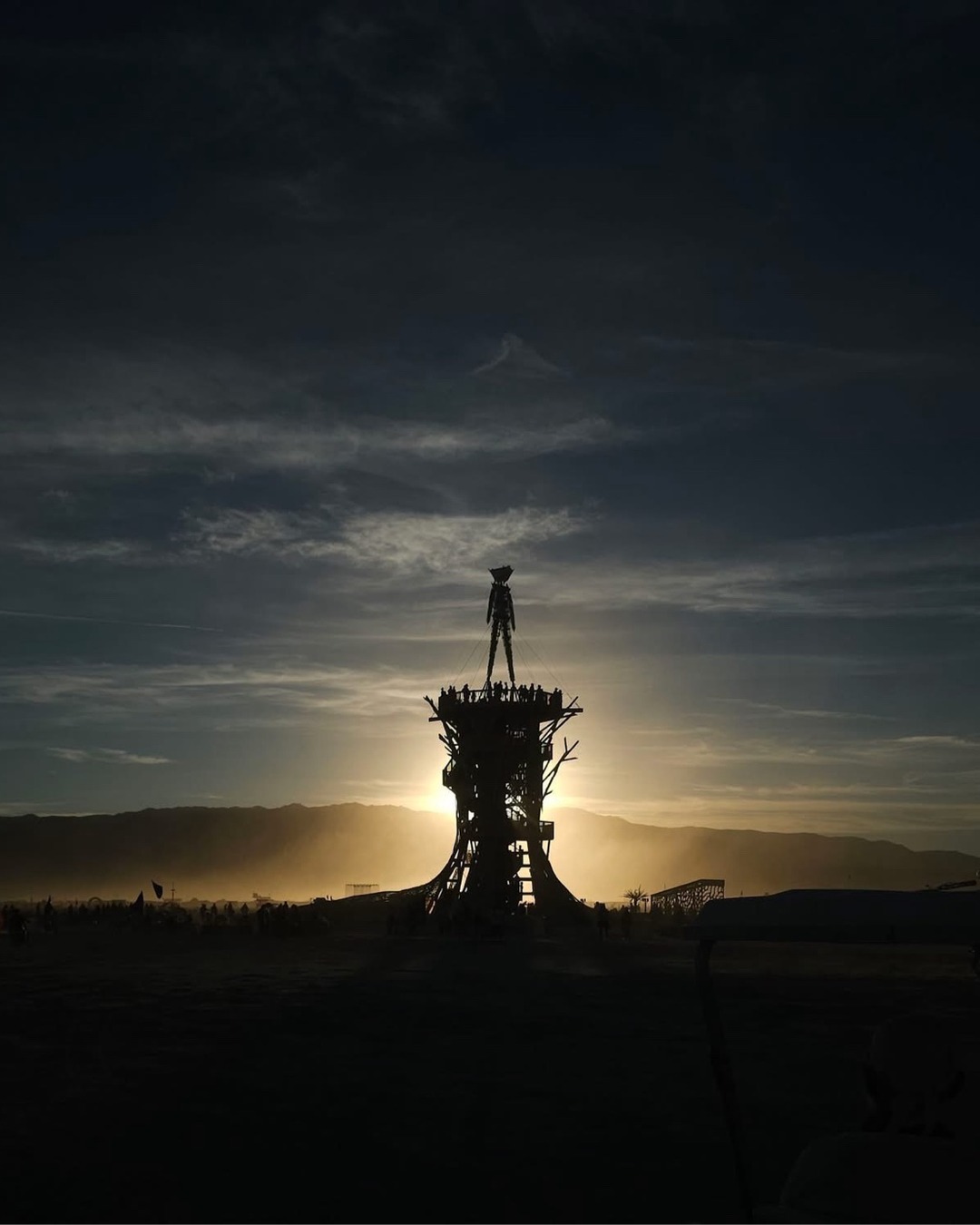
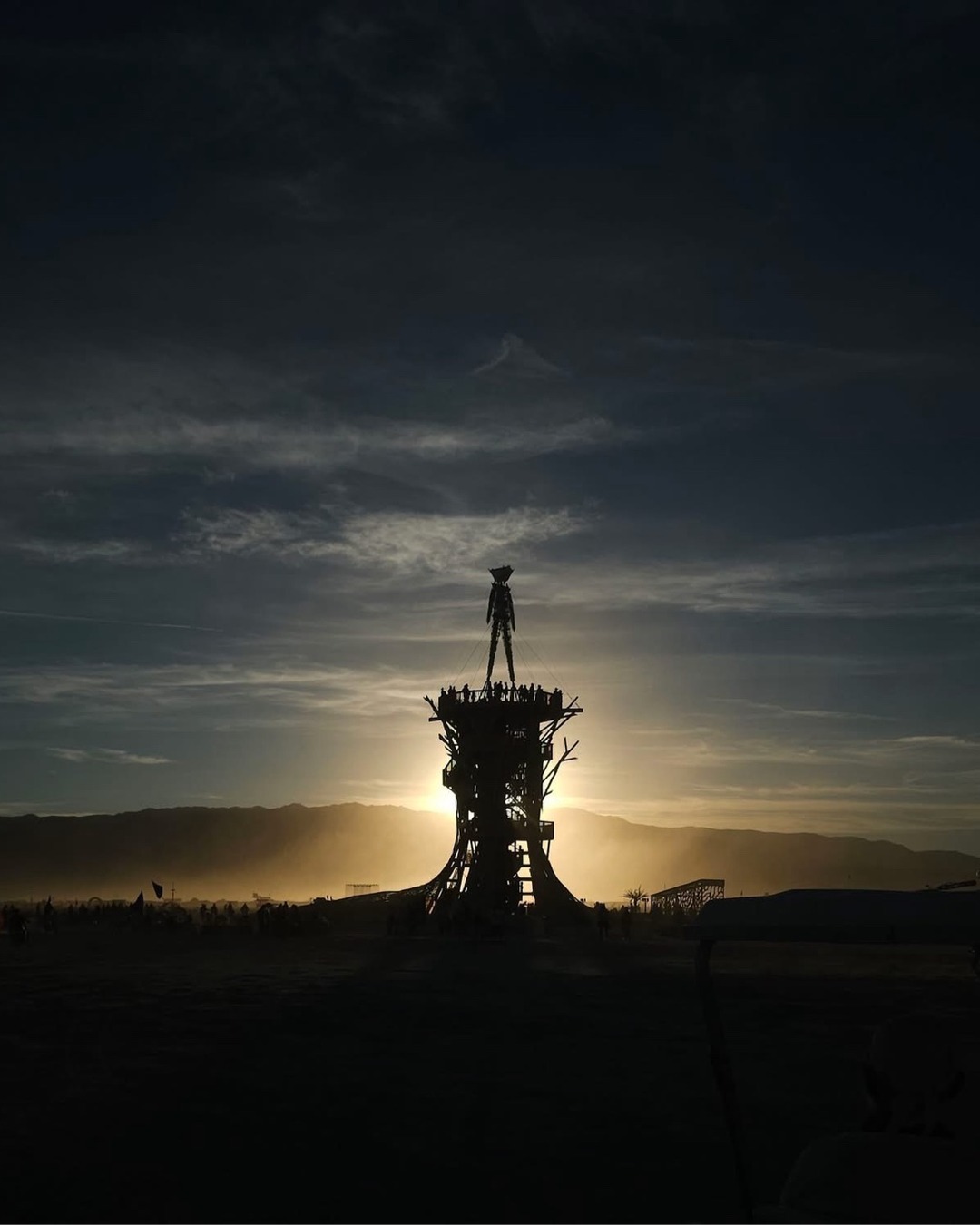
More art, more nights, more beautiful humans. The playa keeps giving. See it on Instagram →
One · The Roam
I kicked off retirement at Burning Man, living out of the Aloha van — a Sprinter conversion that has become home, yoga studio, and co-conspirator. Between desert trips it’s New York: penthouse sunsets, snow days, World Cup fever. And out past all of it, Hawaiʻi is on the horizon.
The soundtrack changes with the road — whatever’s on repeat in my ears tends to say where my head is. Right now it’s this: “Mesmerised” by LEISURE, from Sunsetter.
For years I’ve been on a slow, happy quest to see the wonders of the world with my own eyes. I’ve stood in the shadow of the Pyramids of Giza and looked the Sphinx in the face, walked through the Siq into the rose-red lost city of Petra, and spent a night glamping in a Martian dome under a sky full of stars at Wadi Rum in Jordan. I’ve climbed the Great Wall of China, followed the Inca Trail to Machu Picchu, stood quiet before the Taj Mahal at first light, and felt the thunder of Iguazú Falls in my chest. Every wonder humbles you a little. That’s rather the point.
Petra stays with me in a particular way: you walk the Siq in cool shadow, the rock walls narrowing until the world is little more than a ribbon of sky overhead — and then the passage opens all at once onto the Treasury, rose-red stone catching the desert light like it was carved that morning. There is a quiet wonder in a city cut entirely by hand so long ago, still standing in the sun, still holding the light it was made for.
Machu Picchu asks for patience on the climb, then gives you stillness in return: you arrive among its stone terraces high in the Andes as the morning mist lifts slowly off the peaks, and for a moment the whole place holds its breath. It is the quiet of a city built to touch the sky — no hurry left in it, only stone and cloud and the long view down a green valley.
The Great Wall, by contrast, never lets you forget the walking: it follows the ridgelines for miles, rising and falling with the mountains, ancient stone underfoot and a high wind overhead, until your legs are keeping time with something centuries old. It is less a monument than a reminder — that some journeys, like this wall itself, are built one patient step at a time.
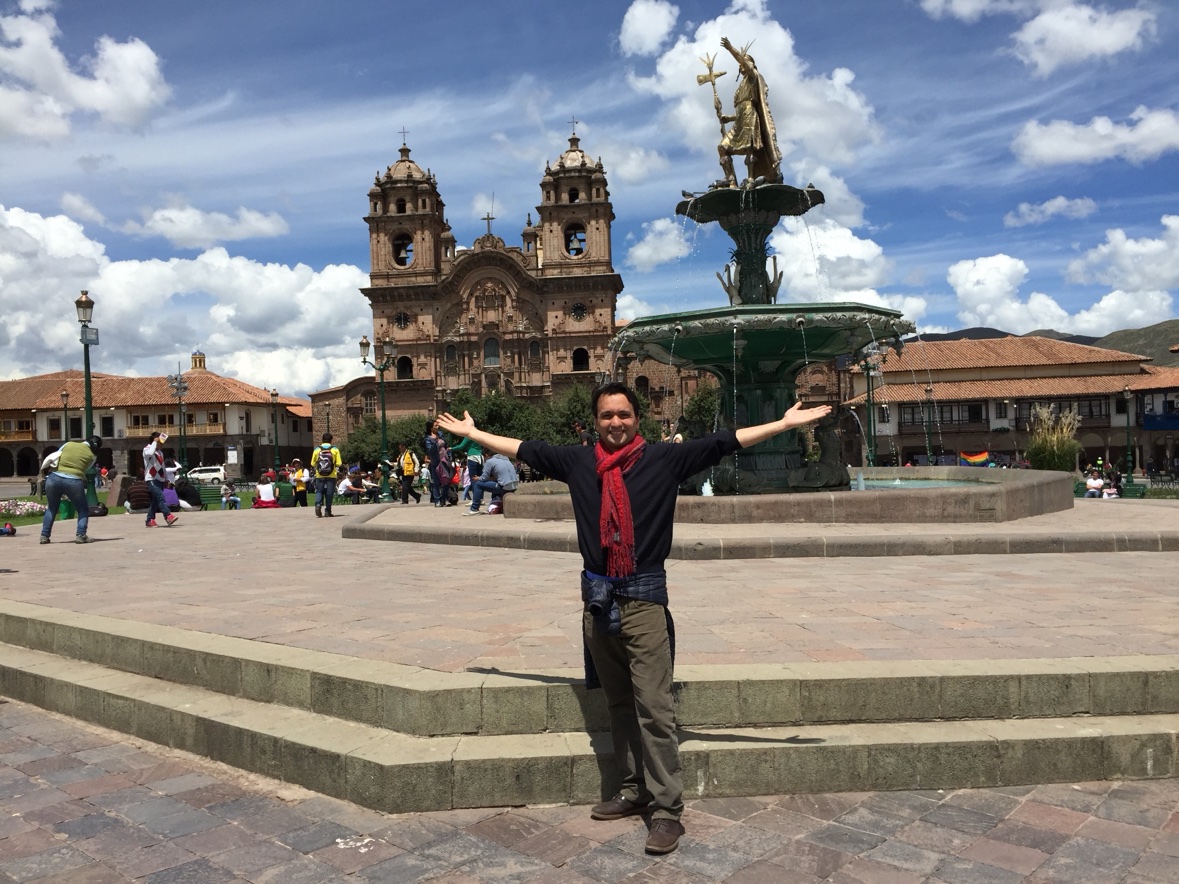
Some wonders you simply arrive at. Machu Picchu makes you earn it, gently, one beautiful stage at a time — and the earning is half the gift. The journey began in Cusco, the old Inca capital, where the plane sets you down at 11,000 feet and the air feels thin enough to slice. In the Plaza de Armas I stood with my arms out before the fountain, the golden Inca statue gleaming above it and the great stone cathedral rising behind — grinning like a man who had just been handed the keys to the Andes.
Cusco has one rule for newcomers: slow down. The local remedy is coca tea, poured from big glass jars that sit beside the lemon grass in every hotel lobby — a warm, green, unhurried cup that coaxes your lungs into keeping up with your ambitions. I took the advice, and the tea, exactly as prescribed.
Then came the Hiram Bingham train, all polished wood, brass, and white tablecloths, winding down through the Sacred Valley as the mountains closed in green on either side. Lunch at a linen-draped table; then the open observation car at the back, where I stood with the valley unspooling behind me and the river keeping time below. It is, I decided, the only civilized way to approach a wonder.
And then the citadel itself. You climb the last of it and the mist does you one final kindness — it lifts. Stone terraces step down the mountainside in perfect green geometry, the peaks stand around wrapped in cloud, and a resident llama regards you with the calm of a creature who has seen ten thousand visitors and been impressed by none. Above it all, Huayna Picchu stands guard, so close and so improbable that you half believe you could pinch its summit between two fingers. I tried. It felt that near, and that unreal, all at once.
Nepal, in the spring of 2018, may have spoiled mountains for me forever. I trekked the Annapurna foothills, wandered Kathmandu’s temples and alleyways — and then a helicopter set me down at Kala Patthar, over 18,000 feet up, with Everest filling the sky. We followed it with breakfast at the highest hotel in the world, because some mornings deserve a little ceremony.
The wonders keep quieter company, too: nights spent chasing the aurora across Iceland until the whole sky started dancing, and an African safari where the dawn chorus had hooves. The list was never really the point. The looking was.
Some nights ask nothing of you but stillness. In Iceland, far from any town light, I stood in the cold with my face turned up while green light moved slowly across a black sky — unhurried, indifferent, impossibly beautiful — and felt the good kind of small.
Africa holds two of my stories, and they turned out to be one. Between 2013 and 2017 I kept returning to Kenya — first to build something that mattered, and then, one July, to stand in the very land that work had served and simply look around. The clinics and the savanna were never far apart. In the end, neither were my reasons for going.
As principal investigator (2016–17) and co-principal investigator (2013–14) on Columbia’s President’s Global Innovation Fund projects, I helped pioneer teledentistry out of Africa. Our Children’s Global Oral Health Initiative was the first teledentistry project in Kenya run by a US dental school: secure clinical images travelled from an AIDS orphanage and from community clinics in the Maasai Mara to specialists an ocean away, in partnership with the University of Nairobi — and I served as an official partner of the WHO Oral Health Programme. The Google Glass chapter of that experiment, the COACH project, is told in The Chapter, just below.
The work, in one line
Specialist care crossed an ocean — so no child would be turned away by distance.
In July 2017 I went back to the Maasai Mara with no clinic to run and nothing to fix — just dawn drives across open grass, the air still cool, and the whole savanna stirring awake around us. The same ground that had trusted us with its children now offered up its mornings. It felt less like a holiday than a thank-you, exchanged in both directions.
The wild, in one line
The dawn chorus had hooves.
People ask which Africa stayed with me — the one I worked in, or the one I wandered. I’ve stopped trying to separate them. The work taught me the place deserved my best; the wild taught me why.
Two · A Chapter Worth Building
For twenty-two years I built smiles at Columbia University’s College of Dental Medicine, where I served as Associate Professor of Clinical Dental Medicine and Director of Pre-Doctoral Programs. Along the way I founded Happy Teeth NY, a pediatric practice for the small patients who taught me the most, and pursued NIH-funded research into children’s oral health. There were keynote stages on three continents, and a few turns offering expert commentary on television.
Some of that work reached much farther than New York. As principal investigator on Columbia’s President’s Global Innovation Fund projects, I helped pioneer telehealth out of Africa — carrying specialist dental care across distance to underserved children who might otherwise never have had it. I served as an official partner of the WHO Oral Health Programme, and later ran an early telehealth experiment using Google Glass — the COACH project — exploring how a specialist’s eyes might travel anywhere a child needs them.
The newest experiment may be the most fun: I now chair Shan Inc, a small, governed board of AIs — putting artificial intelligence to work on family caregiving and on ideas worth sharing. The lab coat is retired. The curiosity isn’t.
Three · The Practice
At the center of this new life is Sanatan Dharma — my highest priority, and a daily practice rather than a hobby. Mornings begin at a small home temple; evenings often end with the Gita and Vedanta, two old friends who keep getting wiser.
Ahead lies a stay at an ashram in Hawaiʻi — part pilgrimage, part deep breath. And on my desk sits a work in progress I can’t stop tinkering with: a little book of the most powerful Sanskrit words — the ones that steady a mind, open a heart, and occasionally fix a whole day.
ॐOm — where every good road starts
From the little book
यात्राYātrā
A journey undertaken with intention — not just moving, but pilgrimage.
One of the words finding its way into my little book of the most powerful Sanskrit words — and, if I’m honest, the word this whole roaming chapter keeps living by.
From the little book
अभ्यासAbhyāsa
Steady, returning practice — the quiet discipline of coming back, again and again, until the mind settles.
Yātrā is the journey; Abhyāsa is how you walk it — the daily return, the page reopened, the breath begun once more. Another word finding its way into the little book.
From the little book
सन्तोषSantoṣa
Contentment — being at ease with what is, while still walking forward.
The journey taken, the practice kept — Santoṣa is what remains: a heart that wants nothing it already has. Another word finding its way into the little book.
From the little book
मैत्रीMaitrī
Friendliness and loving-kindness, offered to all beings without exception.
Santoṣa rests the heart; Maitrī opens it outward — kindness extended to everyone I meet on the road, and to everyone I haven’t met yet. Another word finding its way into the little book.
A verse to walk with
“Thy business is with the action only, never with its fruits.”
— Bhagavad Gita 2.47
Act fully, hold the outcome lightly — the working rule for a retired life, well roamed.
I'm a seeker of sacred knowledge — a wannabe scholar of Vedanta on my better days. This is what plays during my hours with the Gita: the Gayatri Mantra, instrumental.
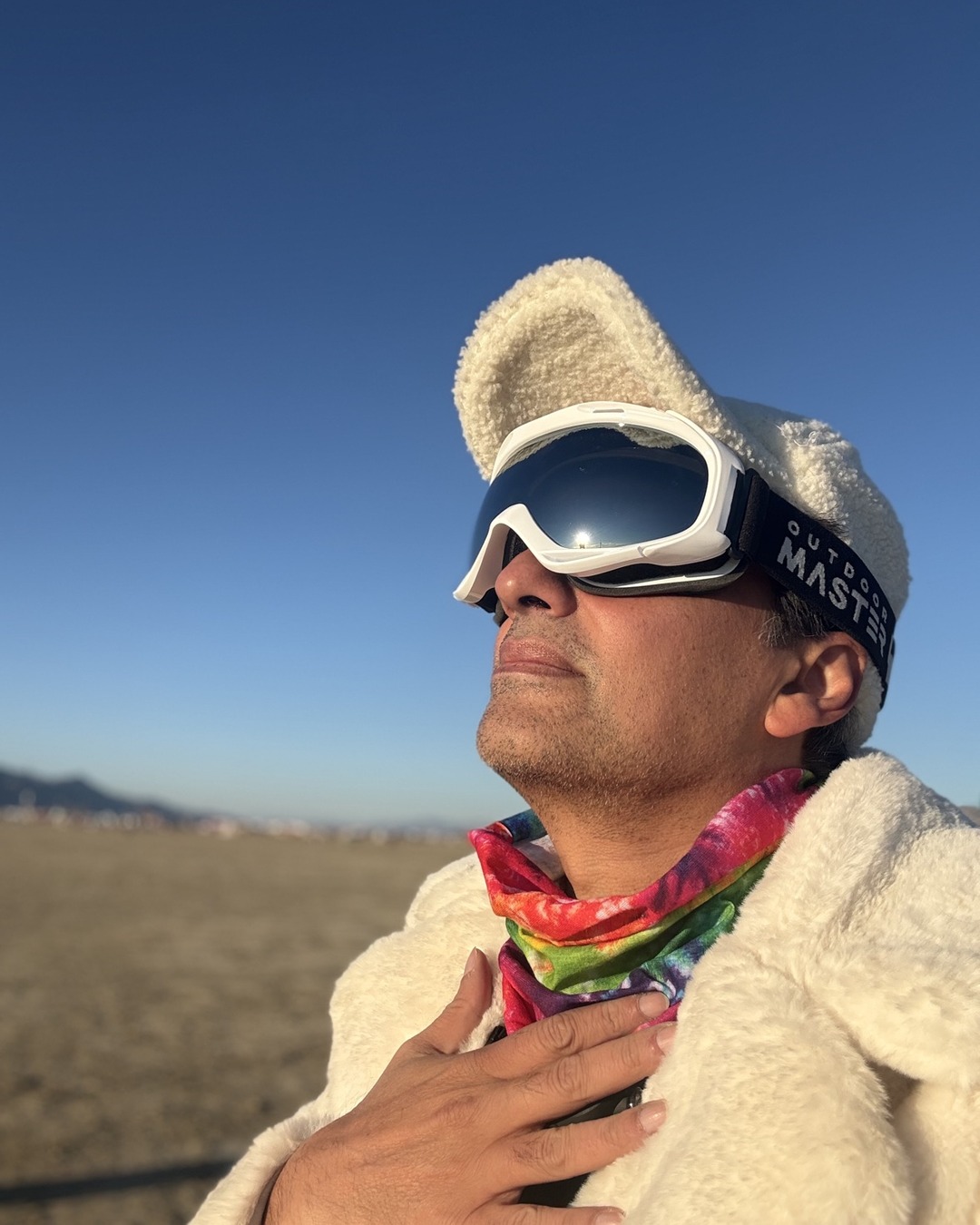
Hand on heart, face to the sky — the commute to practice is short these days.
Four · People & Ground
The best title I hold is Dad. My teenage son keeps me honest, curious, and laughing — usually at myself, which is exactly as it should be. My parents are out in Las Vegas, close in every way that actually matters, and no visit ever feels quite long enough.
Home base is New York City — the sunsets, the snow days, the beautiful noise of it. I’m also a firm believer in puppy yoga: downward dog, but with actual dogs. Highly recommended for the soul and the serotonin.
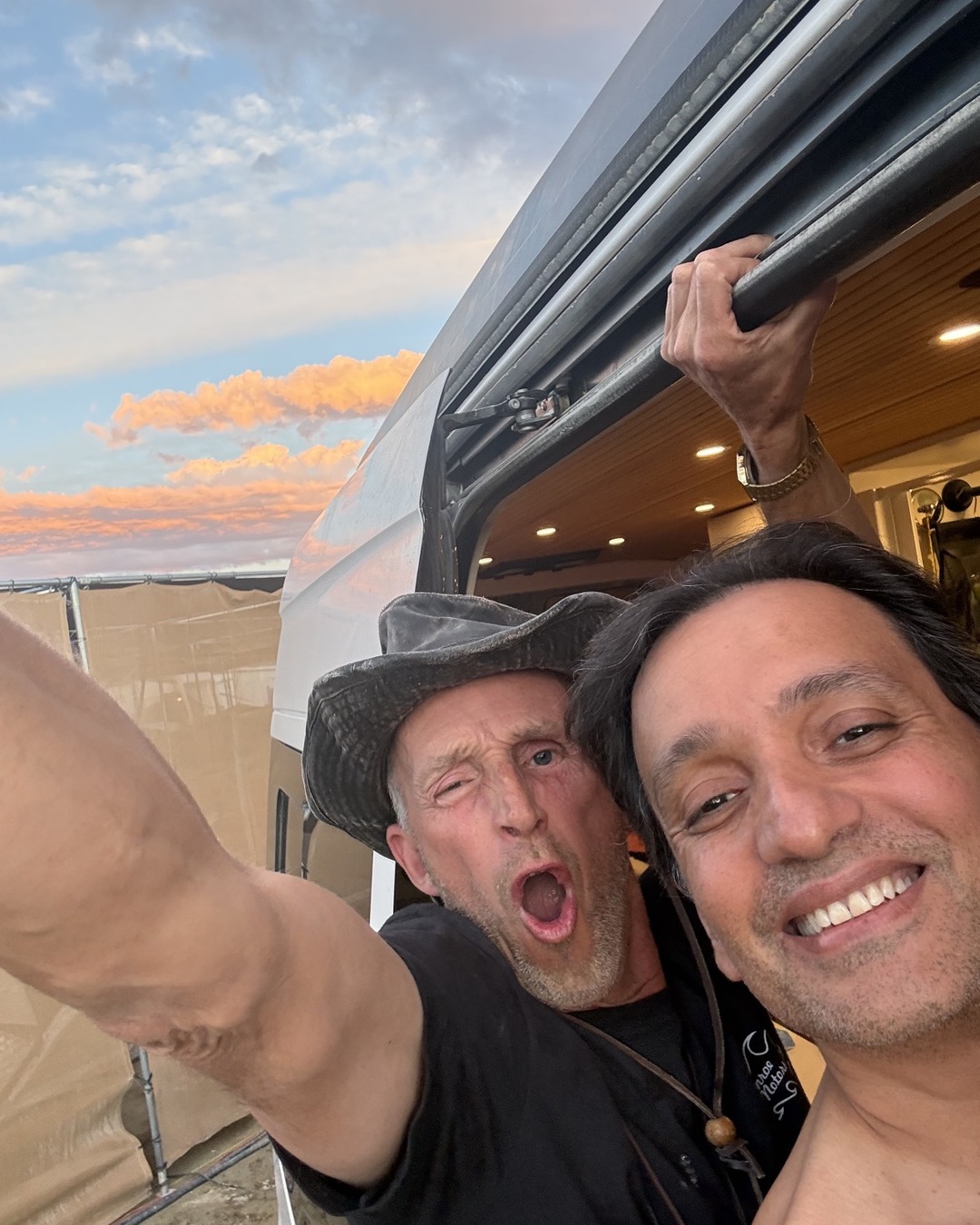
Good company, golden hour — the two essentials.
Five · Say Hello
Most of the adventure unfolds on Instagram — the van, the volcanoes, the mantras, and whatever New York is up to. Come say hello.
For professional & speaking inquiries: livelifeshan@gmail.com